Project / Feb 2025

Smart Attendance Feasibility Study

Year

Feb 2025

Type

Feasibility Study · Market Research

Skills

Feasibility Analysis

Framework Design

Market Research

Stakeholder Analysis

What I Built

A 5-pillar feasibility study on NFC-based smart attendance for Amal & Company — and why the original market was the wrong one.

Evaluated whether NFC-based smart attendance could work in higher education — and concluded it couldn't. The research pointed toward senior living and hospitals instead.

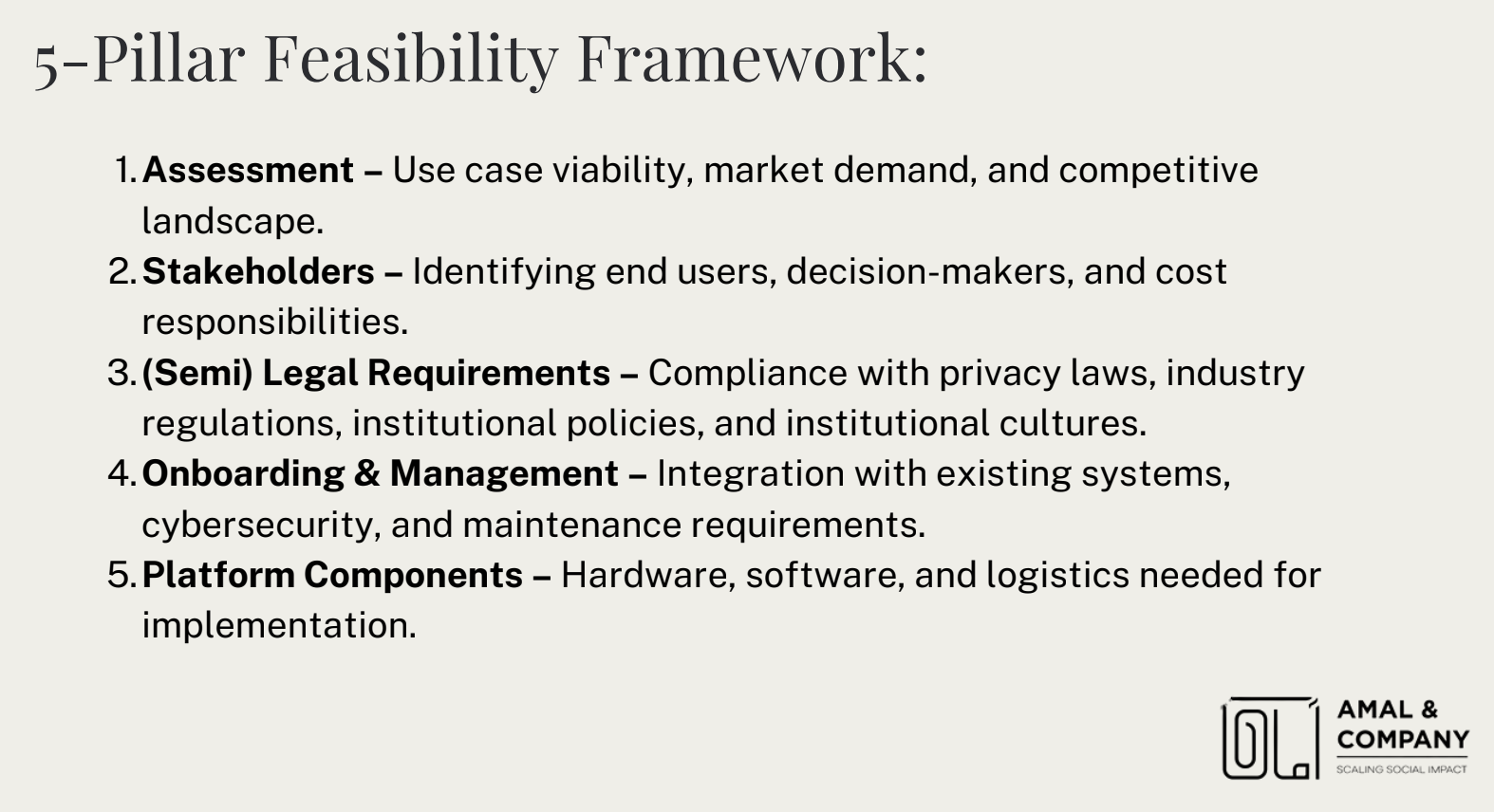
We were hired to evaluate whether an NFC-based smart attendance system could work in universities. I built a five-pillar feasibility framework from scratch — Assessment, Stakeholders, Legal Requirements, Onboarding & Management, Platform Components — and ran it across 8+ markets. Most universities already had NFC infrastructure; the gap wasn't technology, it was adoption will blocked by policy, student privacy objections, and FERPA constraints. The same framework that eliminated the original target pointed toward markets where the privacy framing flipped entirely.

5-pillar framework: built to handle a feasibility question with both technical and cultural dimensions.
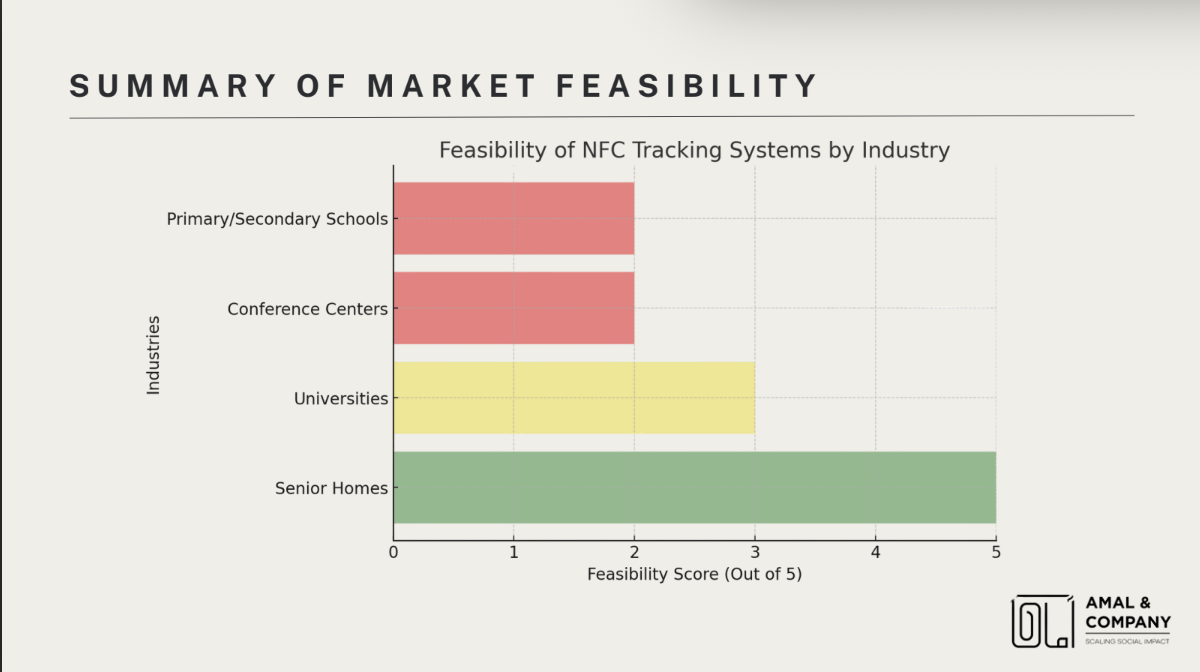
Market summary: aggregate assessment across all evaluated verticals.
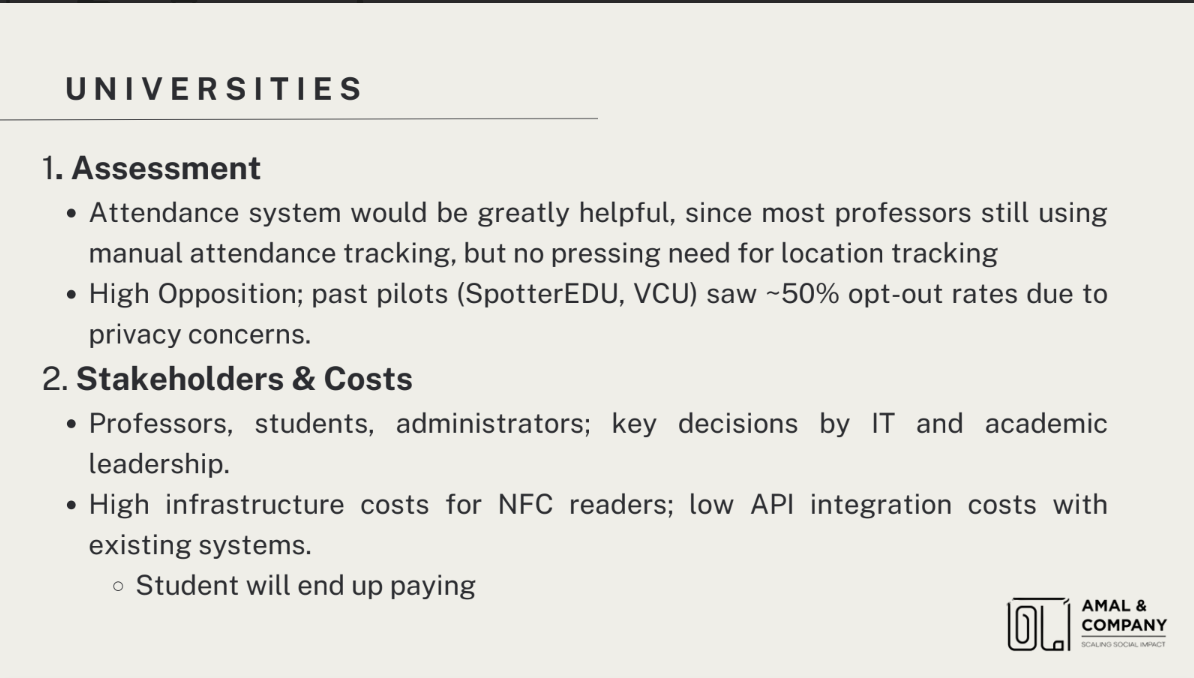
University assessment — pillar 1: market demand and competitive landscape.
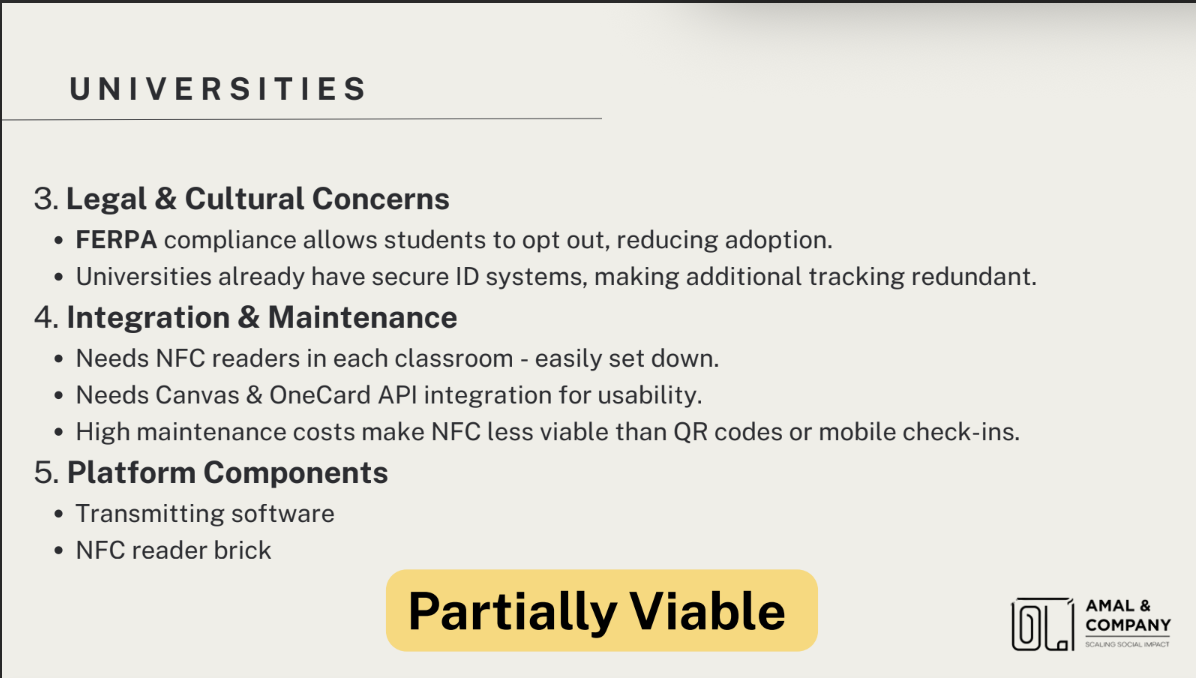
University assessment — pillars 2–3: stakeholder mapping and legal requirements (FERPA).
University assessment — pillars 4–5: onboarding constraints and platform components.
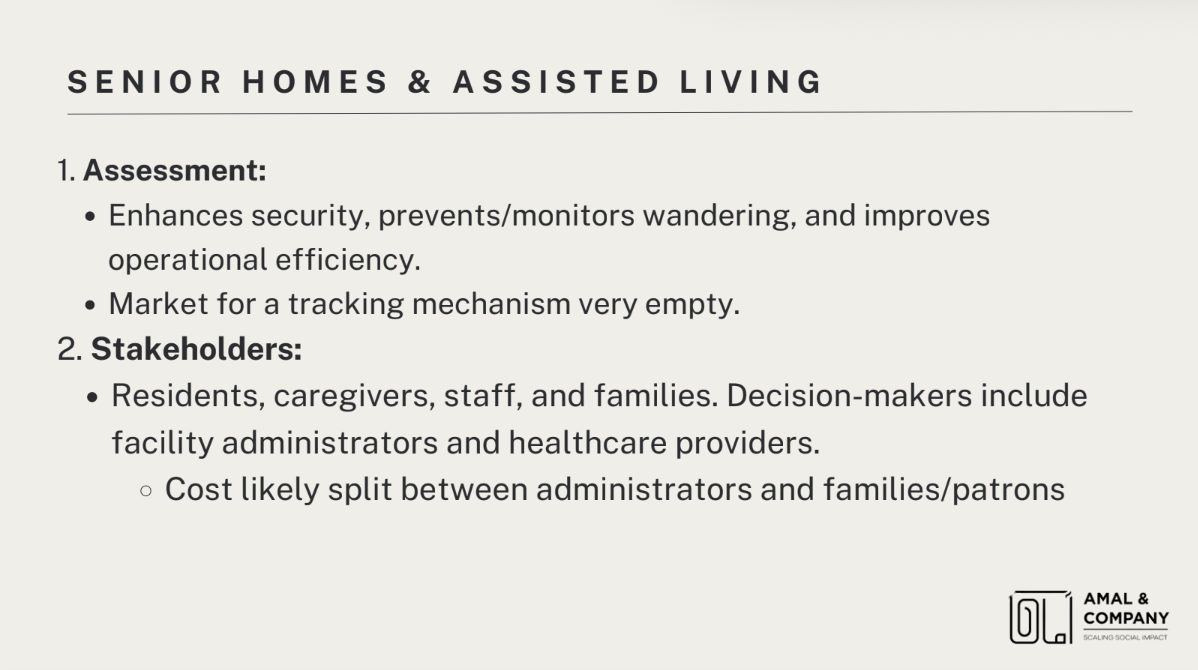
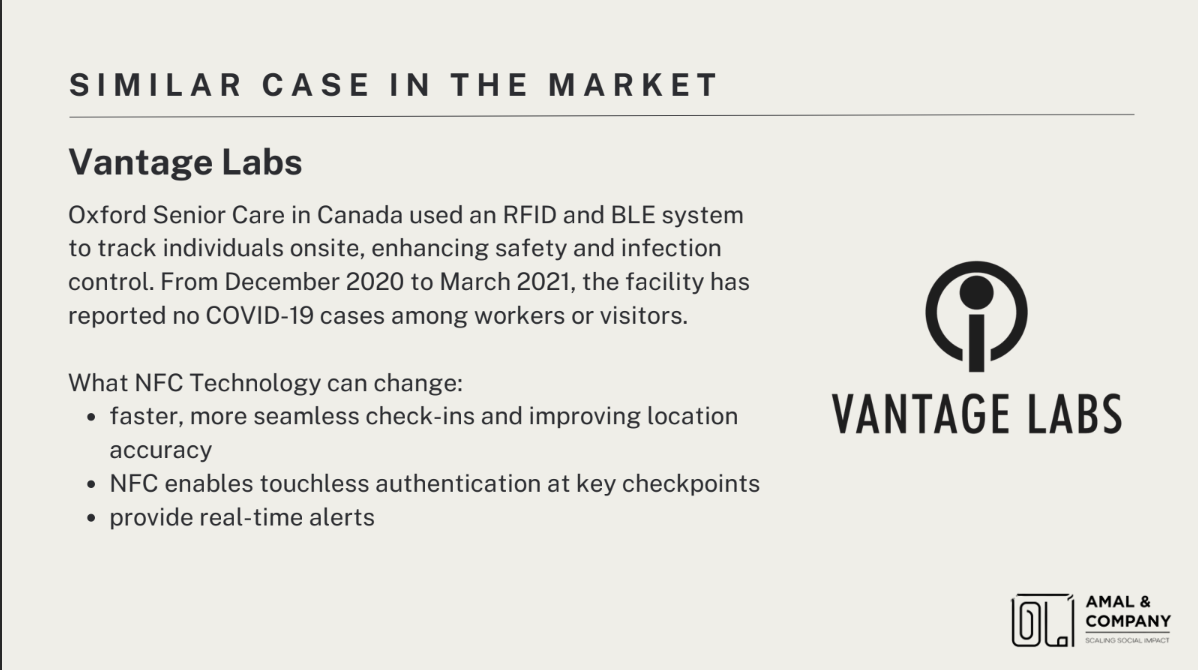
Senior living assessment — where the privacy framing flips: location tracking is a safety feature, not a liability.
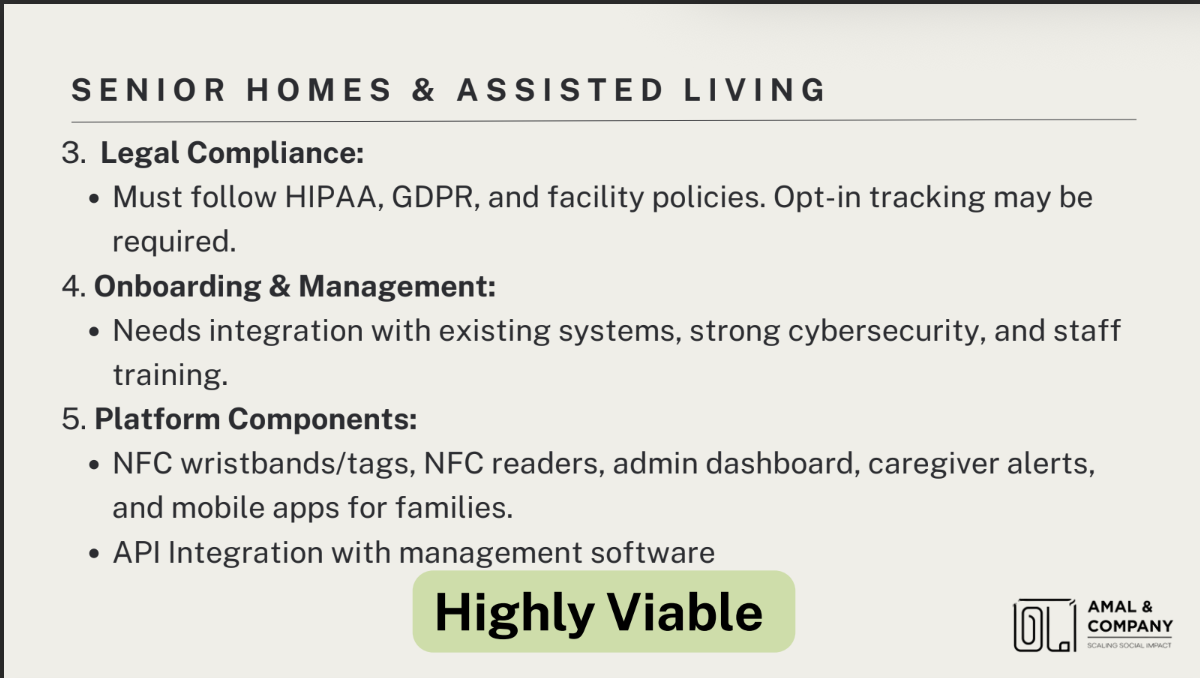
Senior living — stakeholder and legal analysis: HIPAA-compliant, valued by caregivers.
Senior living — platform and onboarding feasibility.
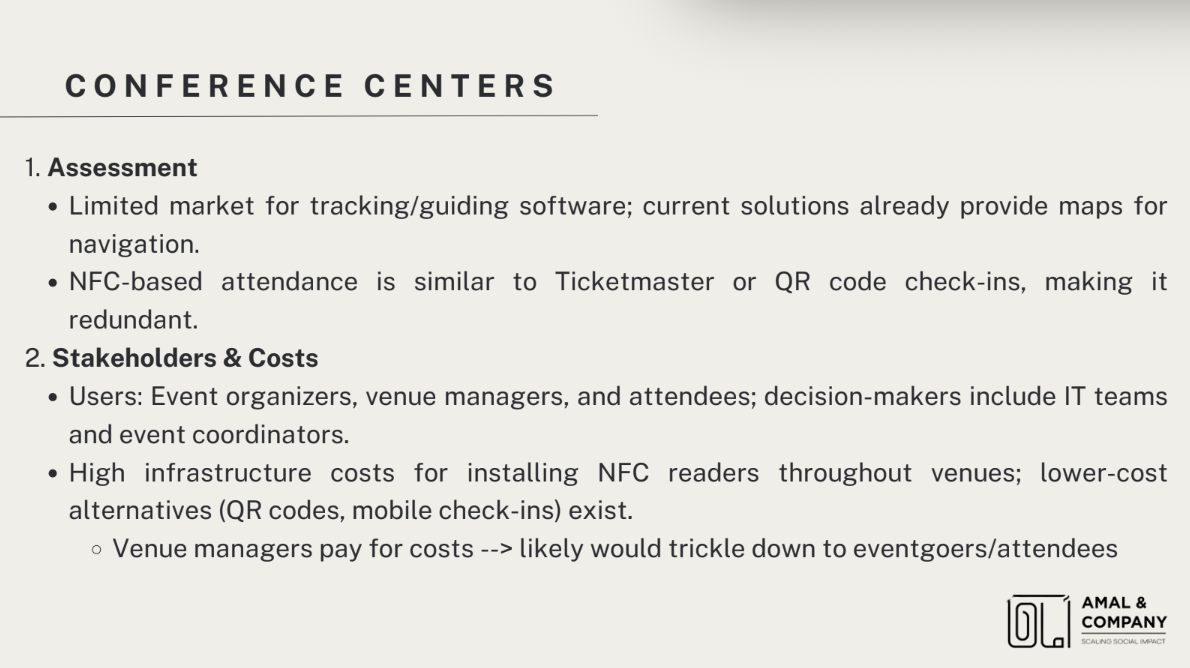
Conference center assessment — pillar 1.
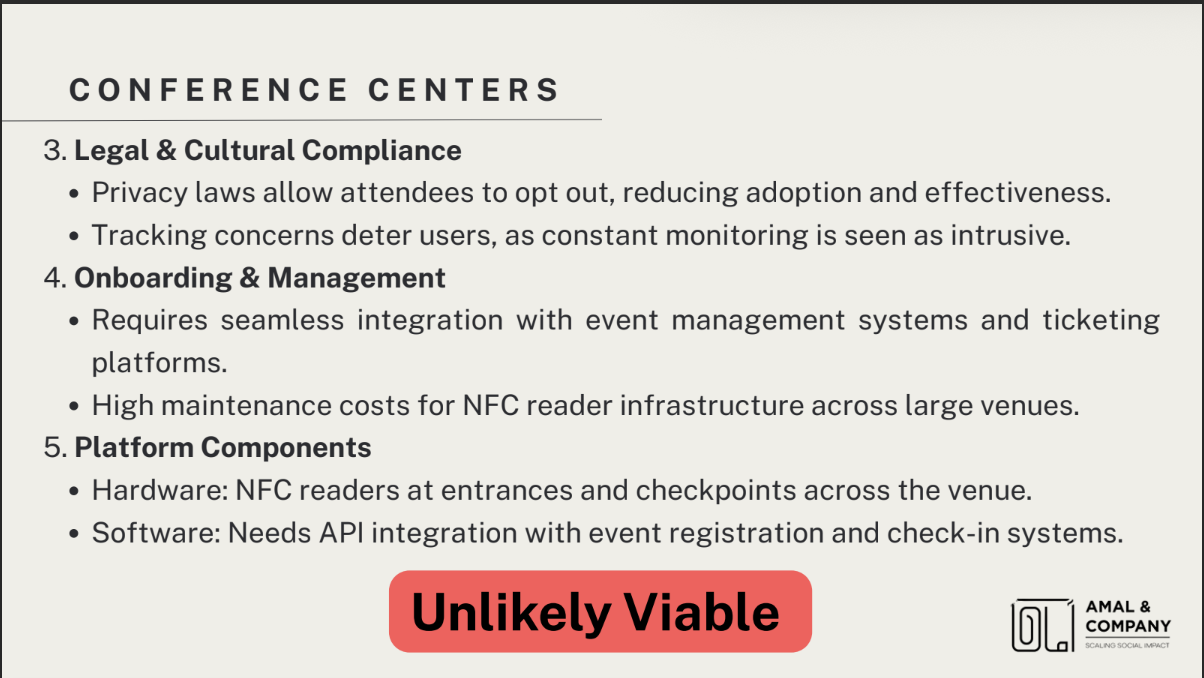
Conference center assessment — pillars 2–3.
Conference center assessment — pillars 4–5.
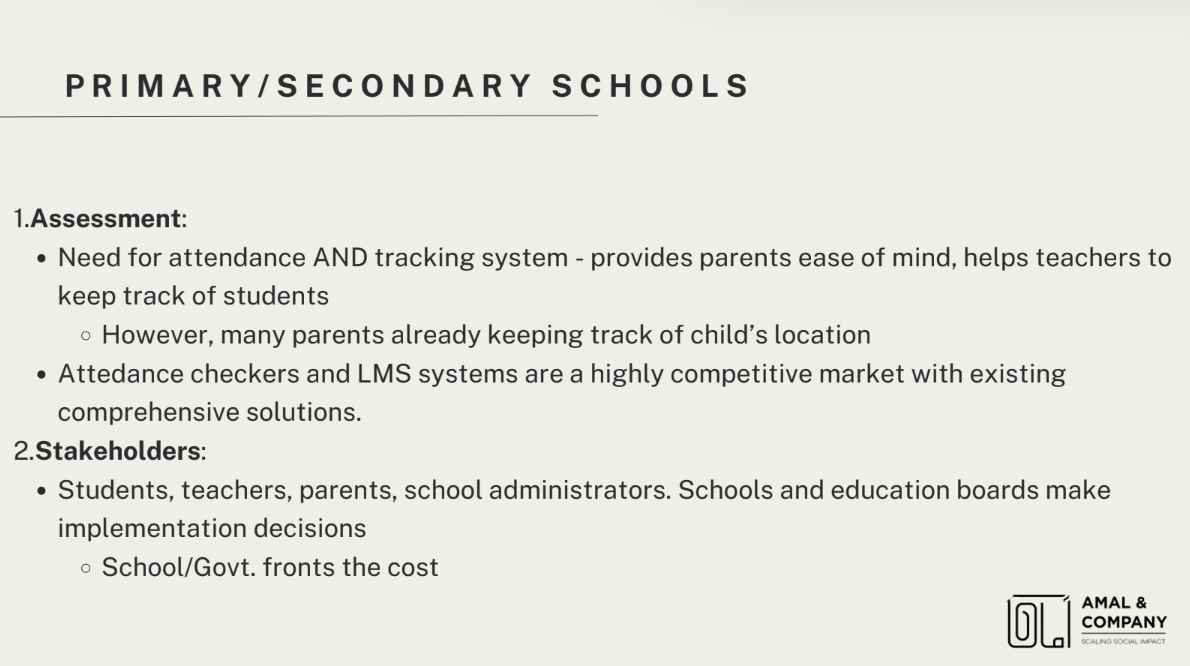
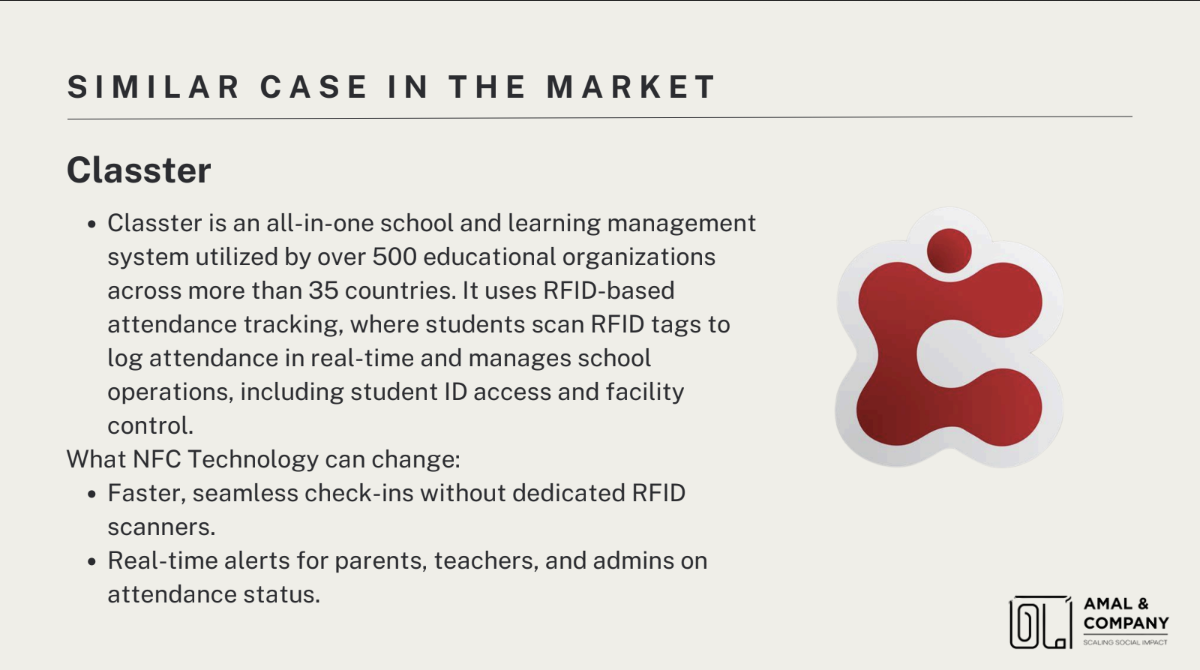
K-12 assessment — pillar 1.
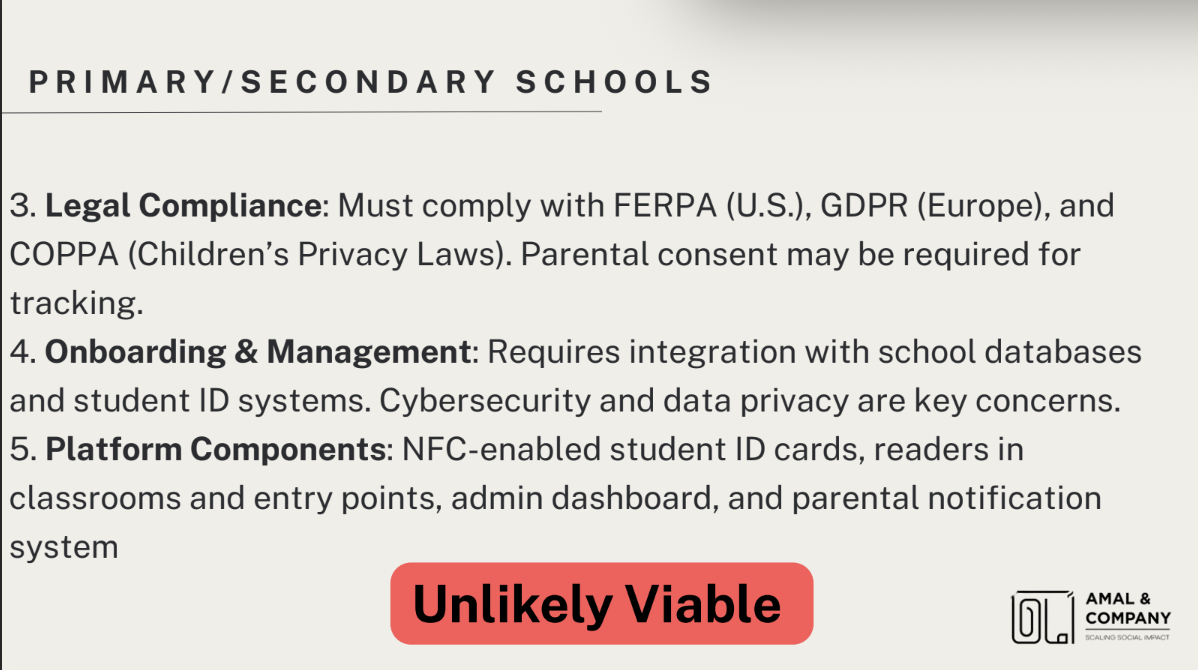
K-12 assessment — pillars 2–3.
K-12 assessment — pillars 4–5.
01 / 14

5-pillar framework: built to handle a feasibility question with both technical and cultural dimensions.

5-pillar framework: built to handle a feasibility question with both technical and cultural dimensions.

5-pillar framework: built to handle a feasibility question with both technical and cultural dimensions.

5-pillar framework: built to handle a feasibility question with both technical and cultural dimensions.

01 / 14

Markets Reframed

Redirected the product toward higher-fit care and facility use cases

Adoption Risks Flagged

Privacy, policy, and integration barriers mapped before launch

Expansion Paths

Senior living and hospitals surfaced as the strongest next markets

POST-PROJECT REFLECTION

What I Took Away

What I learned. Ranges anywhere from technical skills, to general lessons.

My goal is to always learn from an experience, no matter how big or small.

The main skill this split sharpened was stress-testing a product against market reality. We were hired to figure out how to integrate an NFC attendance system into higher education — but we quickly identified it was a significant stretch. Our job wasn't to debate whether the idea was worth pursuing, but to help them move forward. So we started there, tried to make it work for the client's original target, and followed the research wherever it went.

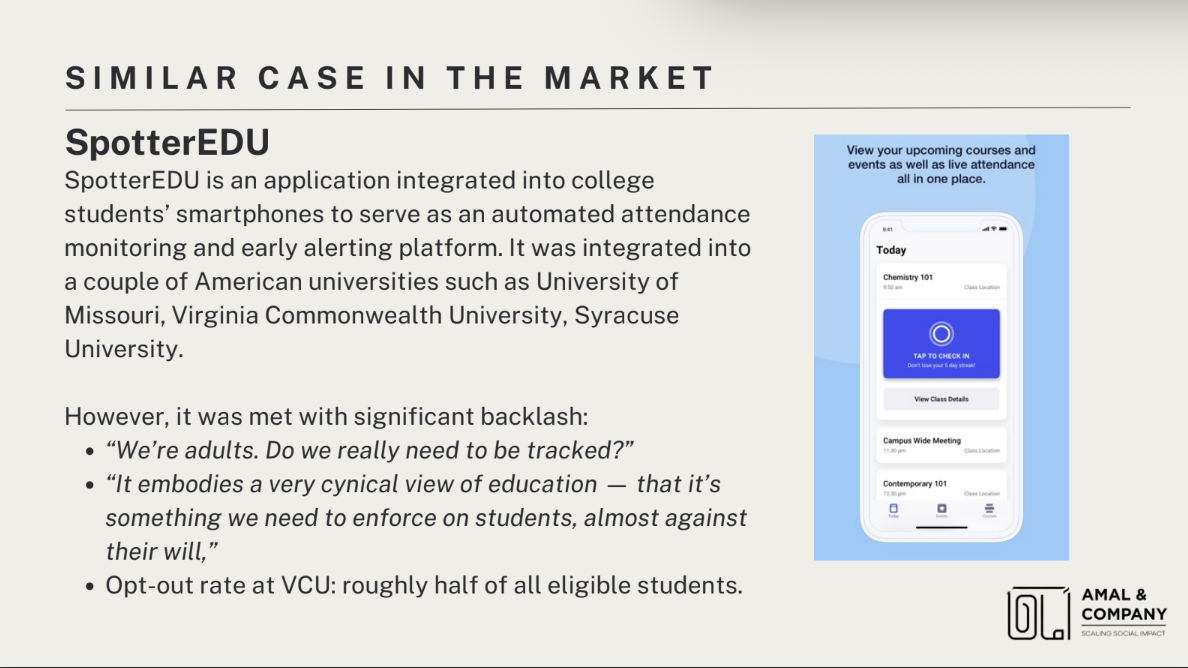
It went pretty far against them. Most universities already have NFC infrastructure for ID and payments — the attendance piece wasn't missing because of a technology gap, it was blocked by policy, privacy backlash, and legal constraints. SpotterEDU faced 50% opt-out rates when piloted. FERPA compliance requirements are explicit. Some schools (like SJSU) outright forbid using attendance for grading. That's not something you can engineer your way around.

Pushing back on a client doesn't have to mean confronting them — it means showing your work. Just saying we thought the idea was bad because we're students who hate attendance wouldn't have helped anyone. By calling out our own biases first, then grounding our pushback in research, we were able to provide feedback that was actionable even when it was contrary to what the client had in mind.

When our framework systematically eliminated markets, it was a result of a process — not a judgment call. The pivot toward Blue Ocean markets (senior living, hospitals) didn't feel adversarial because it came from the same analysis that disqualified the original direction. The client could trace the logic. That's what made it useful.