Project / Nov 2024

Competitive Analysis & Brand Strategy

Year

Nov 2024

Type

Competitive Analysis · Brand Strategy

Skills

Competitive Analysis

SWOT

Market Research

Brand Positioning

What I Built

A 28-page competitive analysis for Rebrandly, a link-management SaaS — evaluating market position against 6 competitors and delivering brand repositioning recommendations.

A 28-page competitive analysis for Rebrandly, a link-management SaaS — scoring market position against six competitors and recommending repositioning across pricing, UX, and SEO. My first client-facing project, with no real stakes before it.

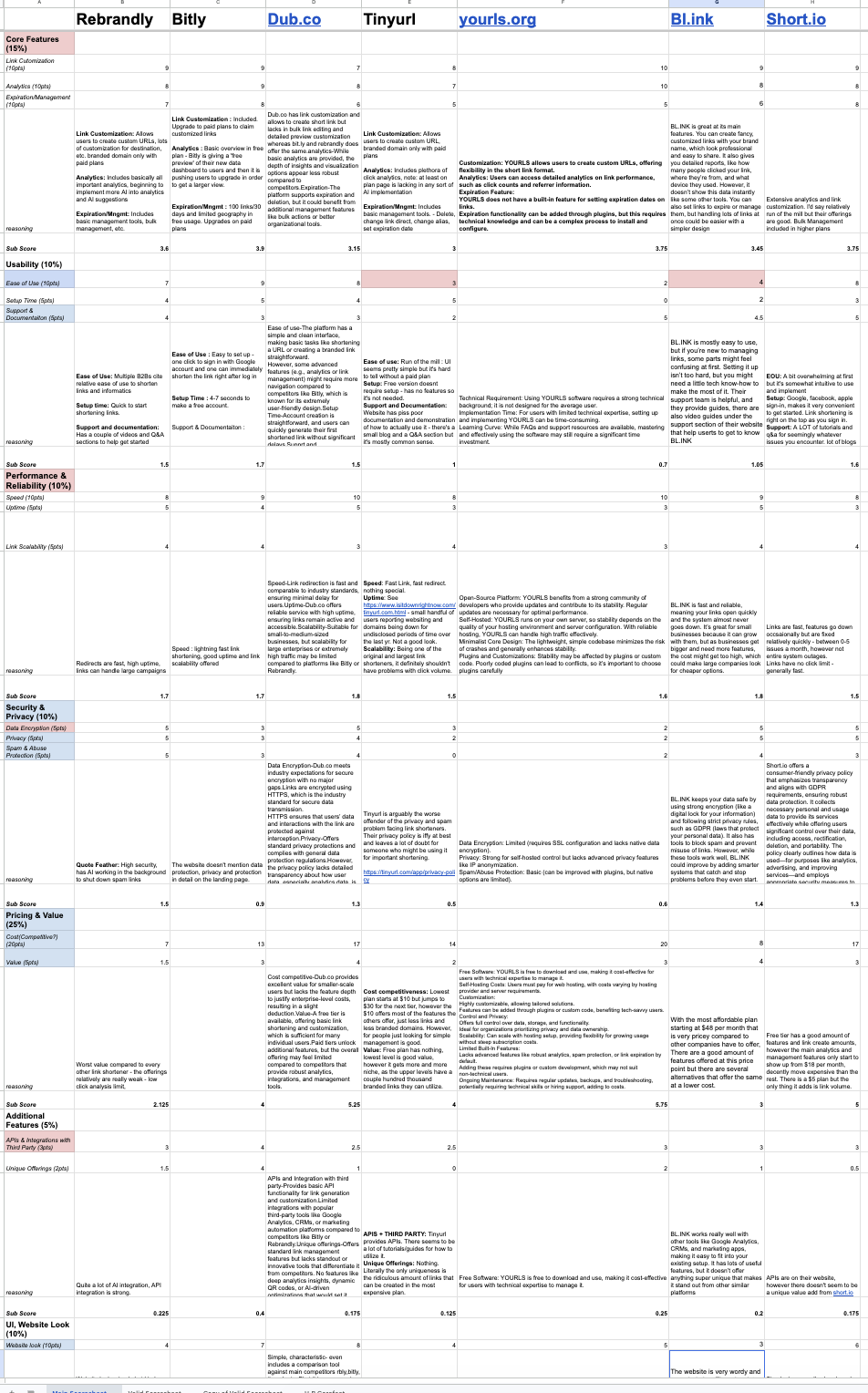
Used an 8-point rubric covering core features, usability, pricing, and SEO health (keyword decay, backlink quality). Deliverable: a 28-page Canva research deck with a market overview, SWOT analysis, and brand positioning recommendations.

Scoring rubric: 8 weighted categories forcing apples-to-apples comparison across tools that market themselves very differently.
Rubric detail: per-category scoring breakdown across all 7 competitors.
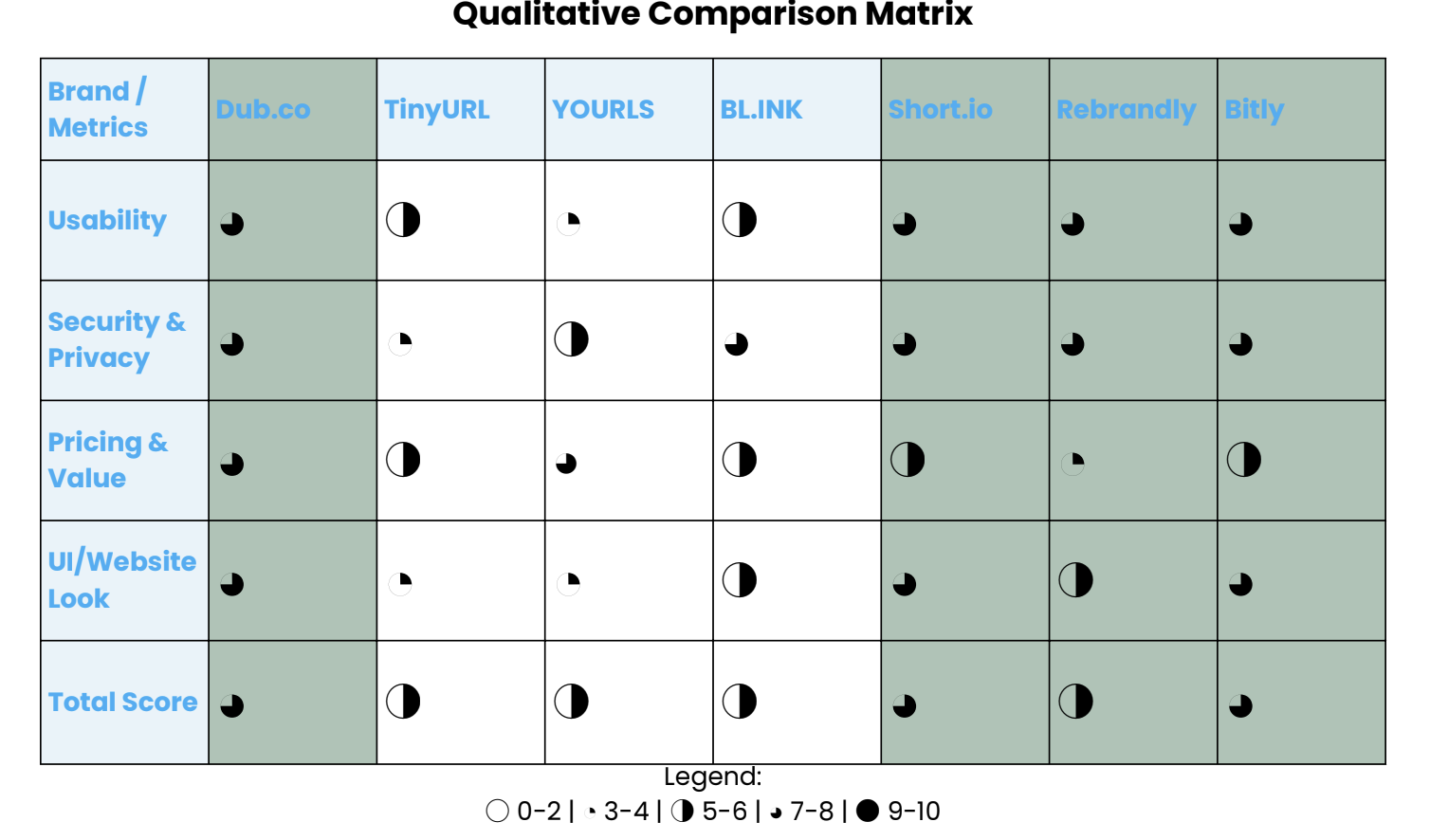
Competitive dashboard: aggregate scores and positioning map.
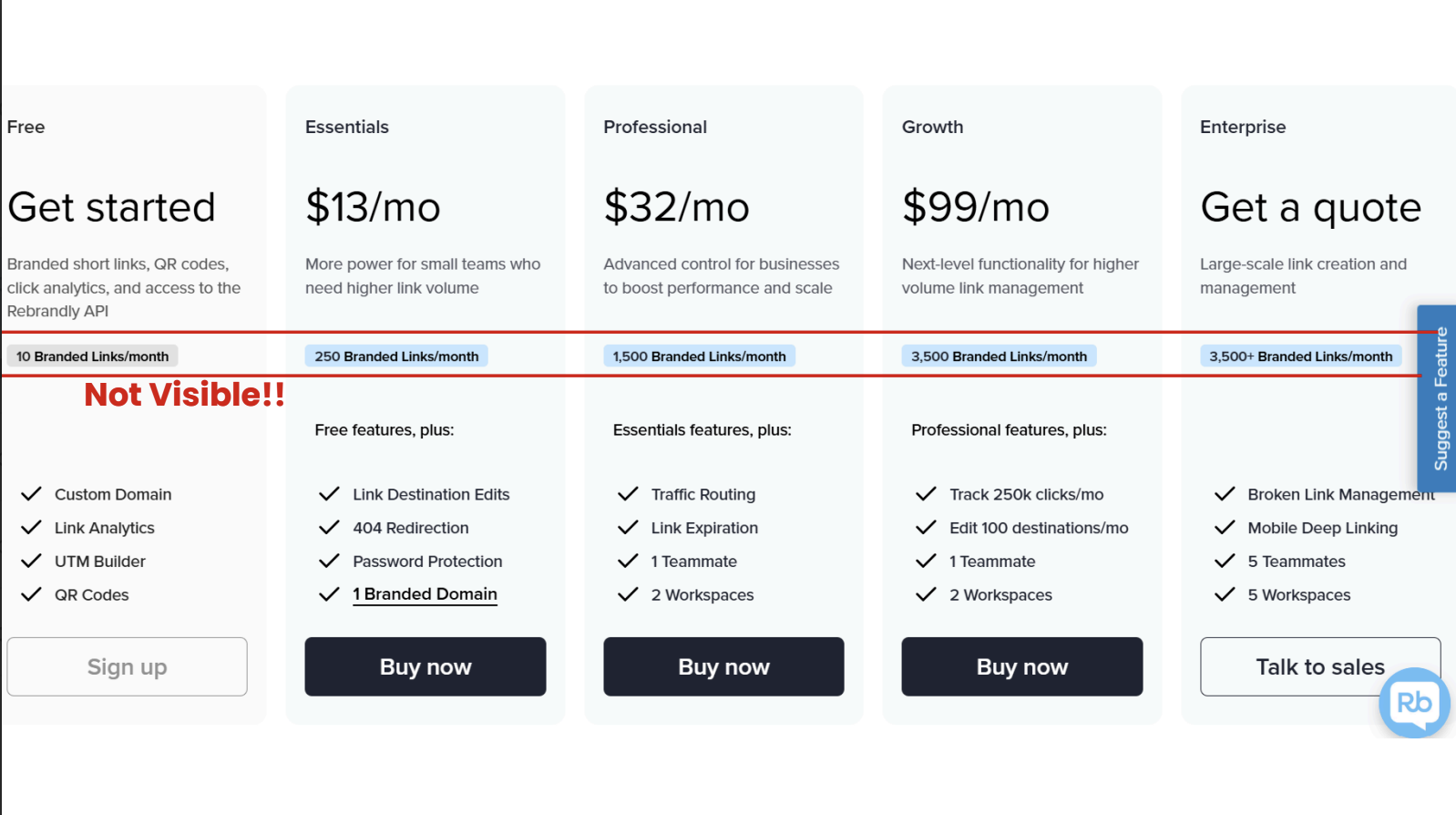
Pricing page recommendation: restructuring to improve Rebrandly's worst-scoring category.
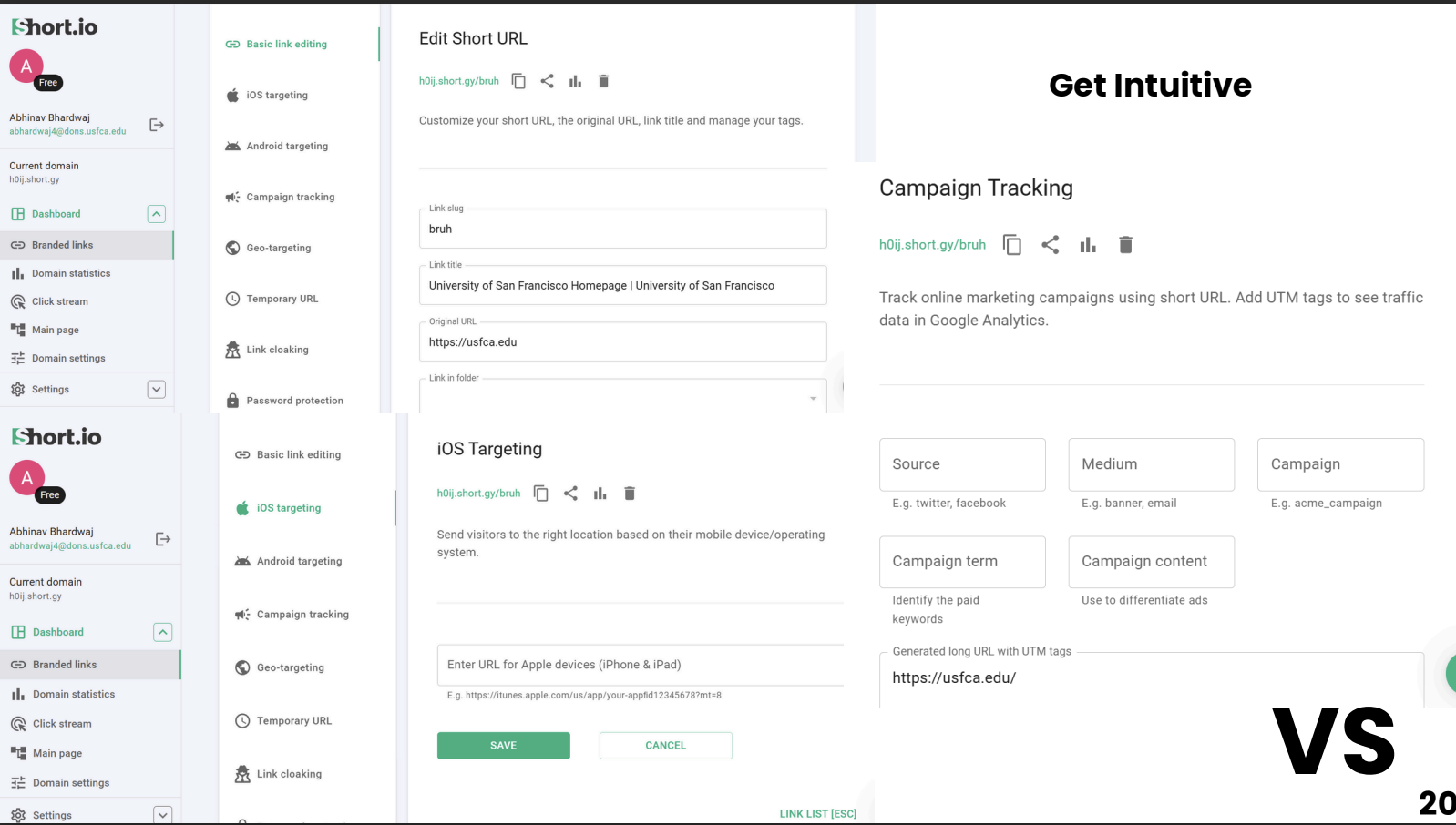
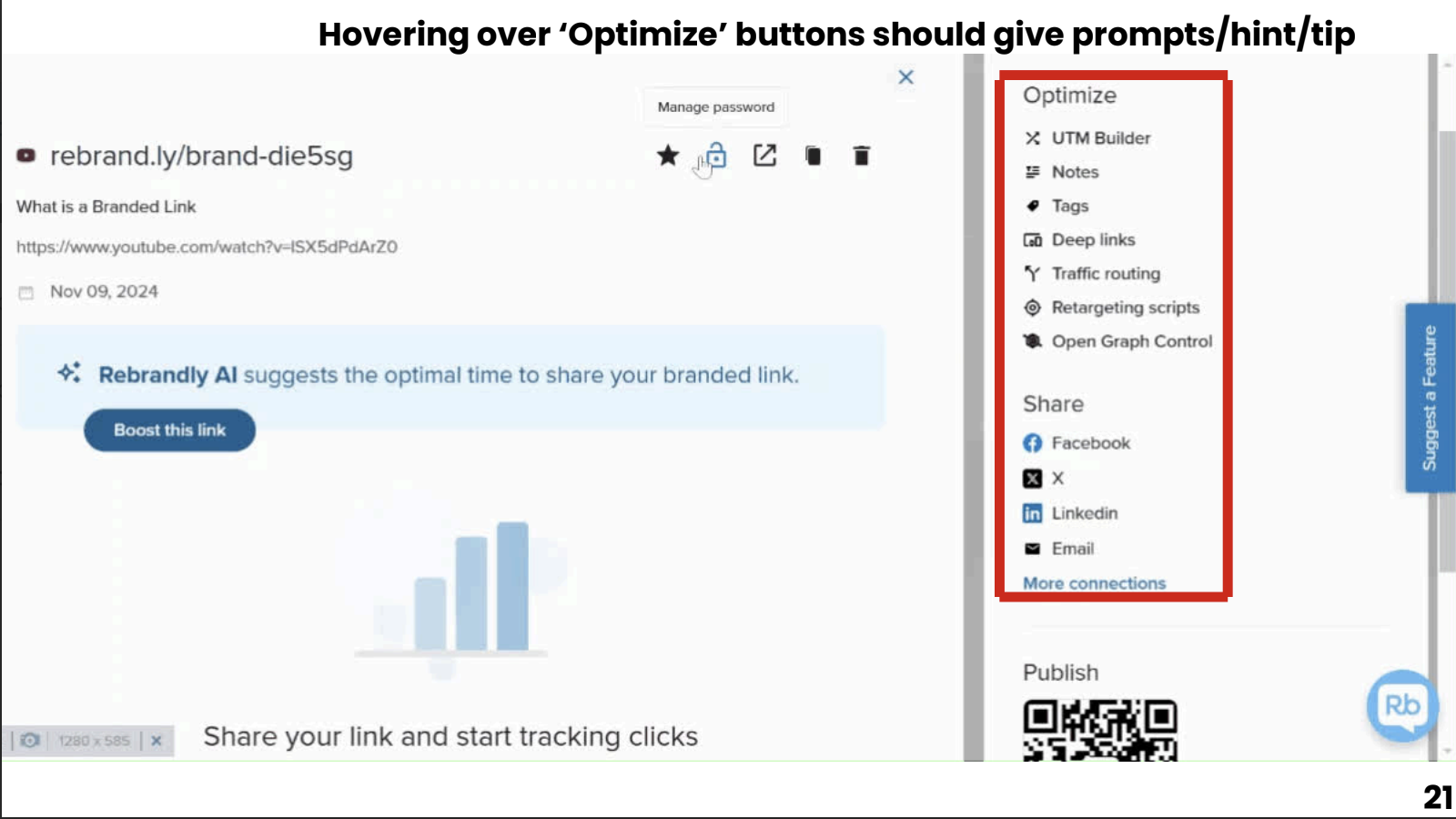
Dashboard UX recommendation: addressing the low usability scores with concrete interface suggestions.
01 / 05

Scoring rubric: 8 weighted categories forcing apples-to-apples comparison across tools that market themselves very differently.

Scoring rubric: 8 weighted categories forcing apples-to-apples comparison across tools that market themselves very differently.

Scoring rubric: 8 weighted categories forcing apples-to-apples comparison across tools that market themselves very differently.

Scoring rubric: 8 weighted categories forcing apples-to-apples comparison across tools that market themselves very differently.

01 / 05

Recommendation Tracks

3 high-priority tracks: pricing, UX, and SEO

High-Impact Fixes

Pricing page restructure, dashboard simplification, and backlink recovery

Strategic Direction

Shift from generic link tooling toward a clearer premium/security story

POST-PROJECT REFLECTION

What I Took Away

What I learned. Ranges anywhere from technical skills, to general lessons.

My goal is to always learn from an experience, no matter how big or small.

This project was my first experience with any client-facing work. Competitively analyzing a real product for a real company felt different from coursework — the stakes were low by any professional standard, but the feedback loop was real.

It was also my first exposure to applying marketing and GTM fundamentals: how to structure a competitive analysis, what a SWOT is actually supposed to tell you versus what it looks like when you fill it out for its own sake. And while I wasn't the designated team lead, I found myself guiding direction at multiple points — pushing us back to the goal when we started drifting, keeping track of what still needed to get done.

I first started understanding what it meant to lead during this project. Not going to oversell it — the organizational instincts I developed here were more like a rough sketch of what I'd eventually need.

The team's first instinct was to critique Rebrandly's positioning as a "premium" product in a market where they were clearly getting outpriced and outdesigned. That led toward trying to fix the category rather than the client's problem.

Once we reframed the job as "find where this product fits" instead of "fix whether it should exist," the analysis got more useful. The rubric started producing answers instead of just confirming what was already obvious. It's a simple distinction — but it's the kind of thing you only really learn by getting it wrong first.