AGENTIC SWE · ENTREPRENEURSHIP · PRODUCT MANAGEMENT
One calendar app, a lot of broken assumptions.
Vibe coding isn't one prompt and a finished product. It's a practice: knowing what you want, building it with agents, inspecting the result, and doing it again. I've been in this loop for the past two months, trying to actually understand what I'm building.
This section maps the whole thing.
Story is how it started and what I've learned.
Environment is the workflow and tools I've built around it.
Projects are the apps that came out of it.
Watched is what I'm reading right now. Everything here is still moving.
Proof of motion
What the loop produced.
Practice Volume, Product Judgment, Iteration Through Version Control.
- 3
- Product ideas advanced
- Drift, Workbench, and Augment moved from loose ideas into scoped product directions.
- 1
- Shipped MVP
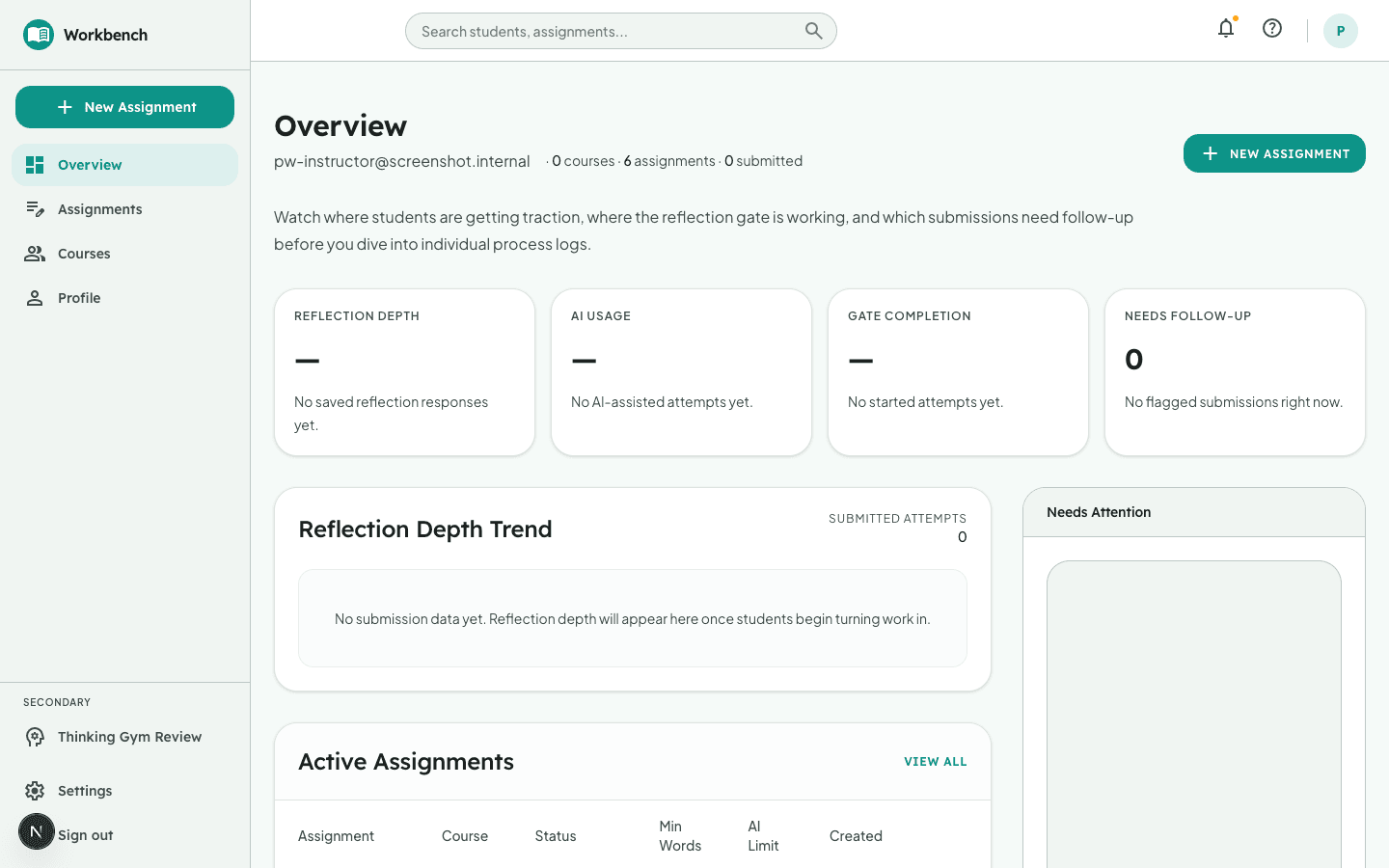
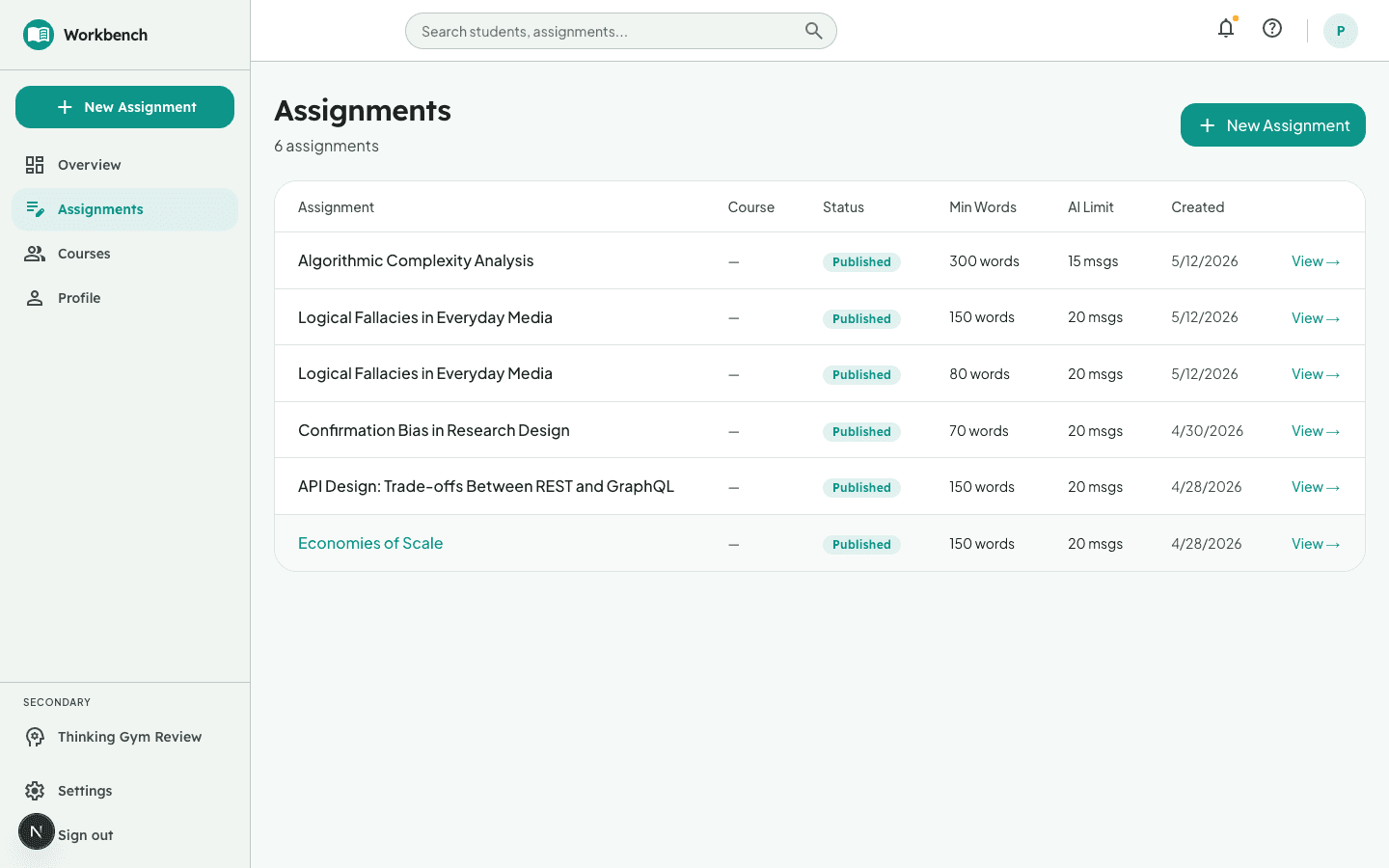
- Workbench reached a working MVP with the core reflection-first assistant loop in place. Drift, soon.
- 80+
- GitHub commits in a month
- The learning showed up as repeated commits, branches, rollbacks, and rebuilds.
- MANY
- Repos Integrated or Watched
- Implemented a LOT of tools into the workflow. Even more starred for future exploration.Constantly on top of new tools.
Workbench · reflection gate · assistant · synthesis
Make the student think before the AI unlocks.
← All projectsWhat it is
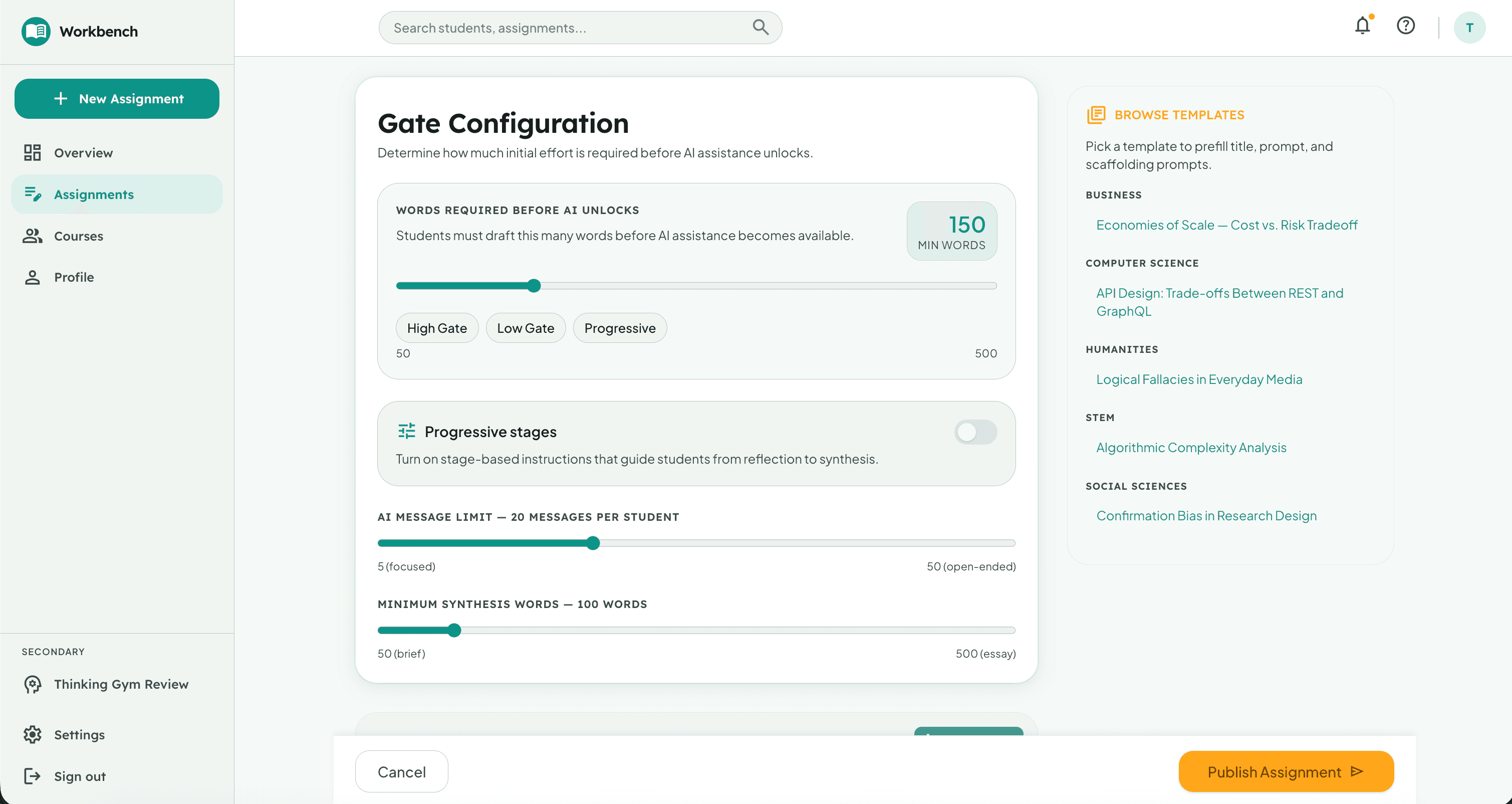
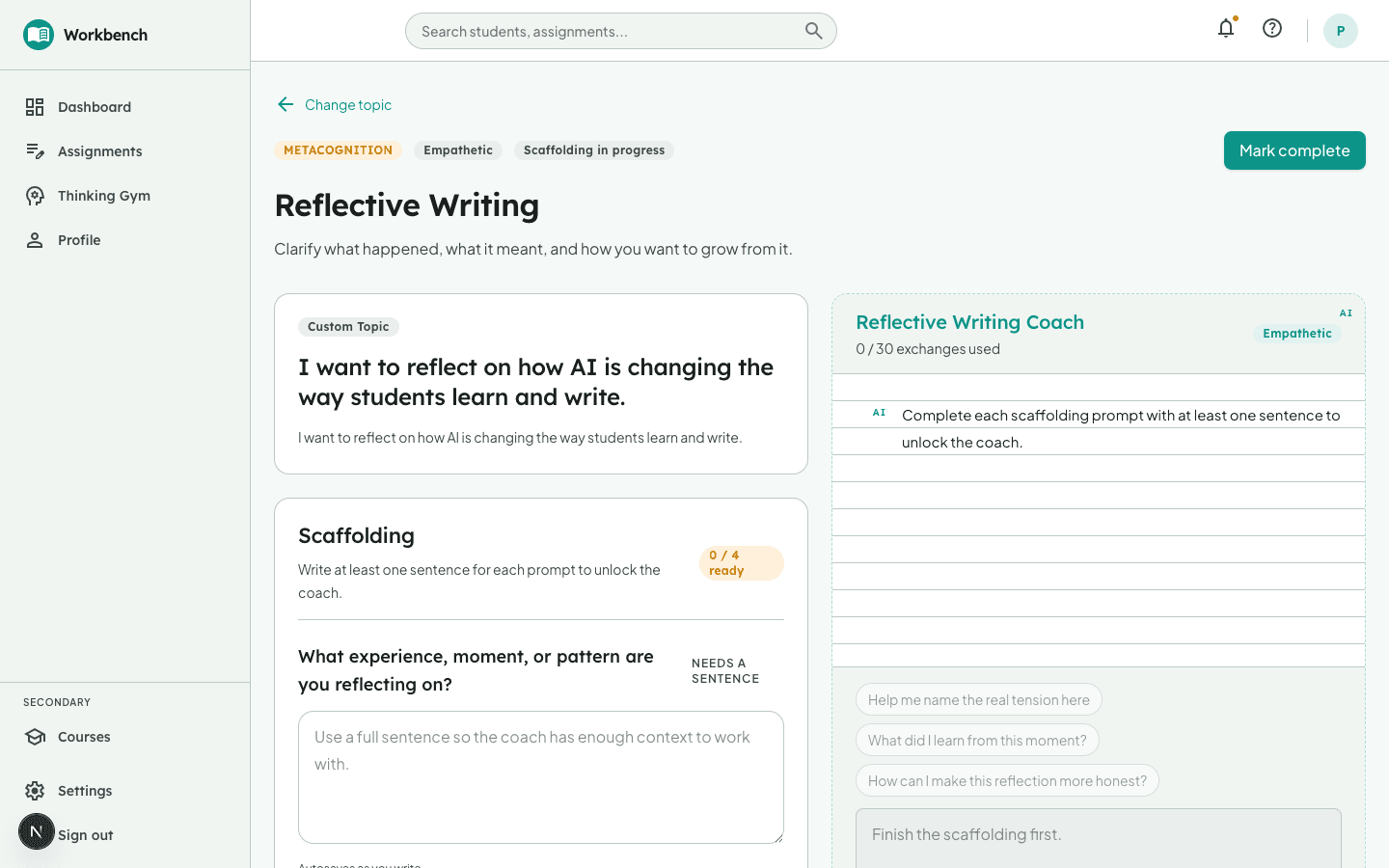
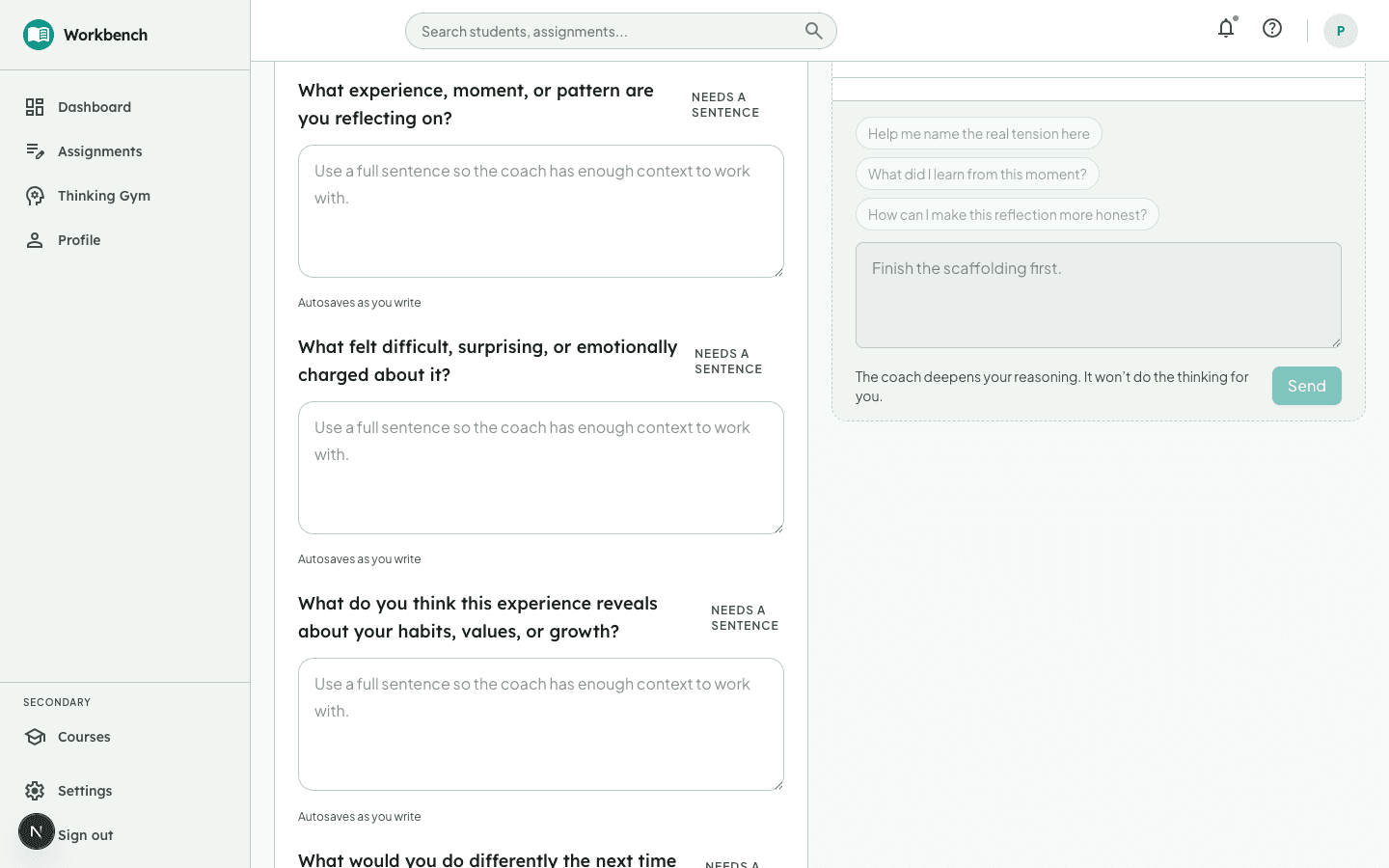
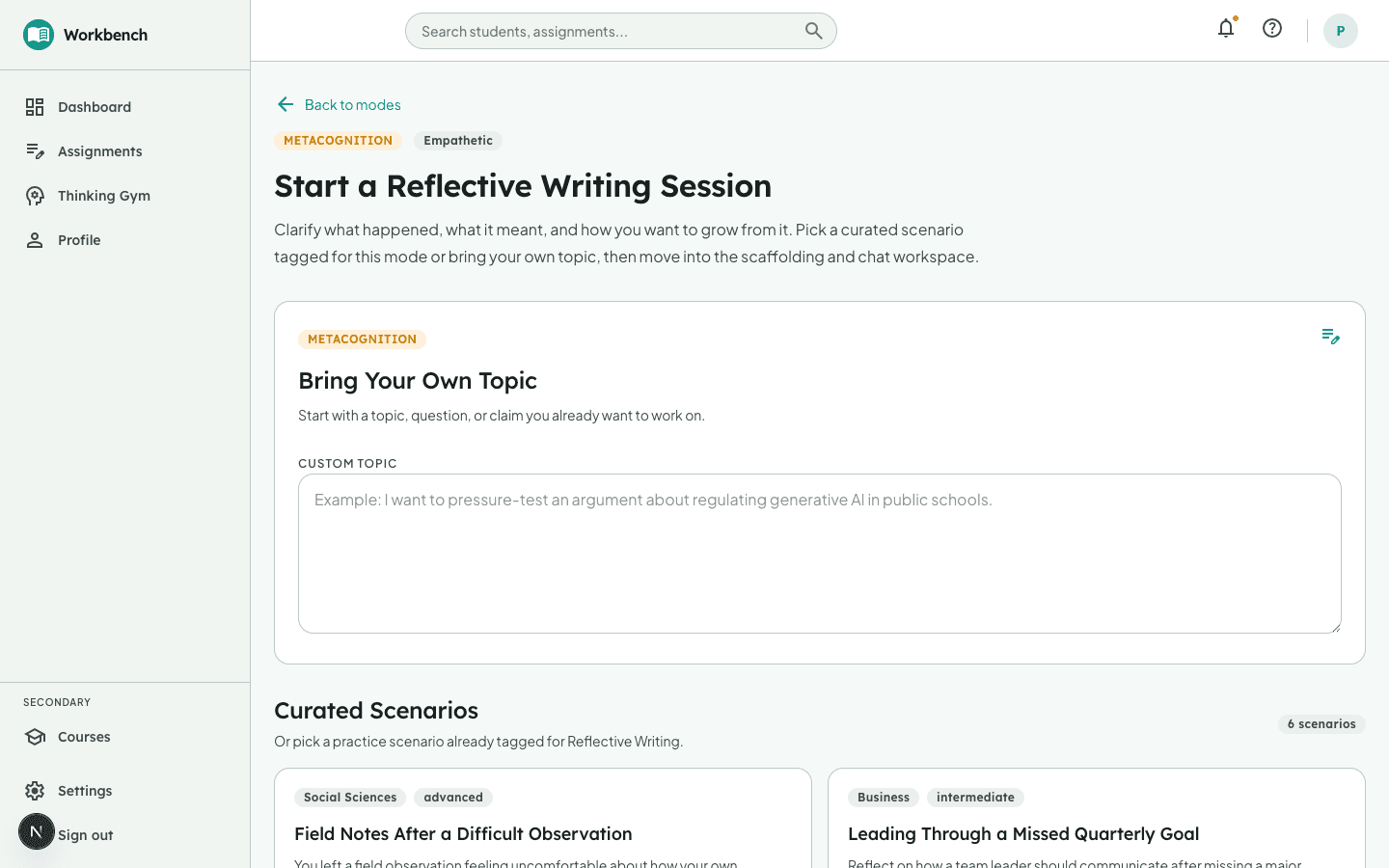
An AI writing assistant with a reflection gate in front of it. Before the AI unlocks, you have to write your own thoughts — what you're trying to say, where you're stuck, what you think. The assistant that unlocks is adversarial: it critiques and expands your claims rather than answering you.
The premise came from watching how students actually use AI. They're not using it to think harder — they're using it to skip thinking entirely. Paste in the assignment, ask for the answer, get a 100%, never engage with the material. Workbench is built around that problem, but not in the restrictive way.
Workbench embraces the AI age. Instead of holding students back form using AI, why not give it to them, but limit the exposure they have instead? Instead, the idea is: to unlock the AI, you have to write your own thoughts: what you're trying to say, where you're stuck, what you think. Once you do that, an adversarial helper unlocks. It's set up to critique and expand their claims, not give straight answers. The system prompt is designed around making the user think. It asks why you think this way, how you got there. The voice is something like: okay, you want help with this — I can tell you you might be going in this direction, but what do you think? It won't give you the destination.
The goal is to train students to have a better sense of AI literacy as well as how to think better by understanding their own thoughts. You have to bring something into the room before the AI will engage with it. Working MVP — backend, frontend, the whole loop. The reflection gate mechanic is what I want to validate.
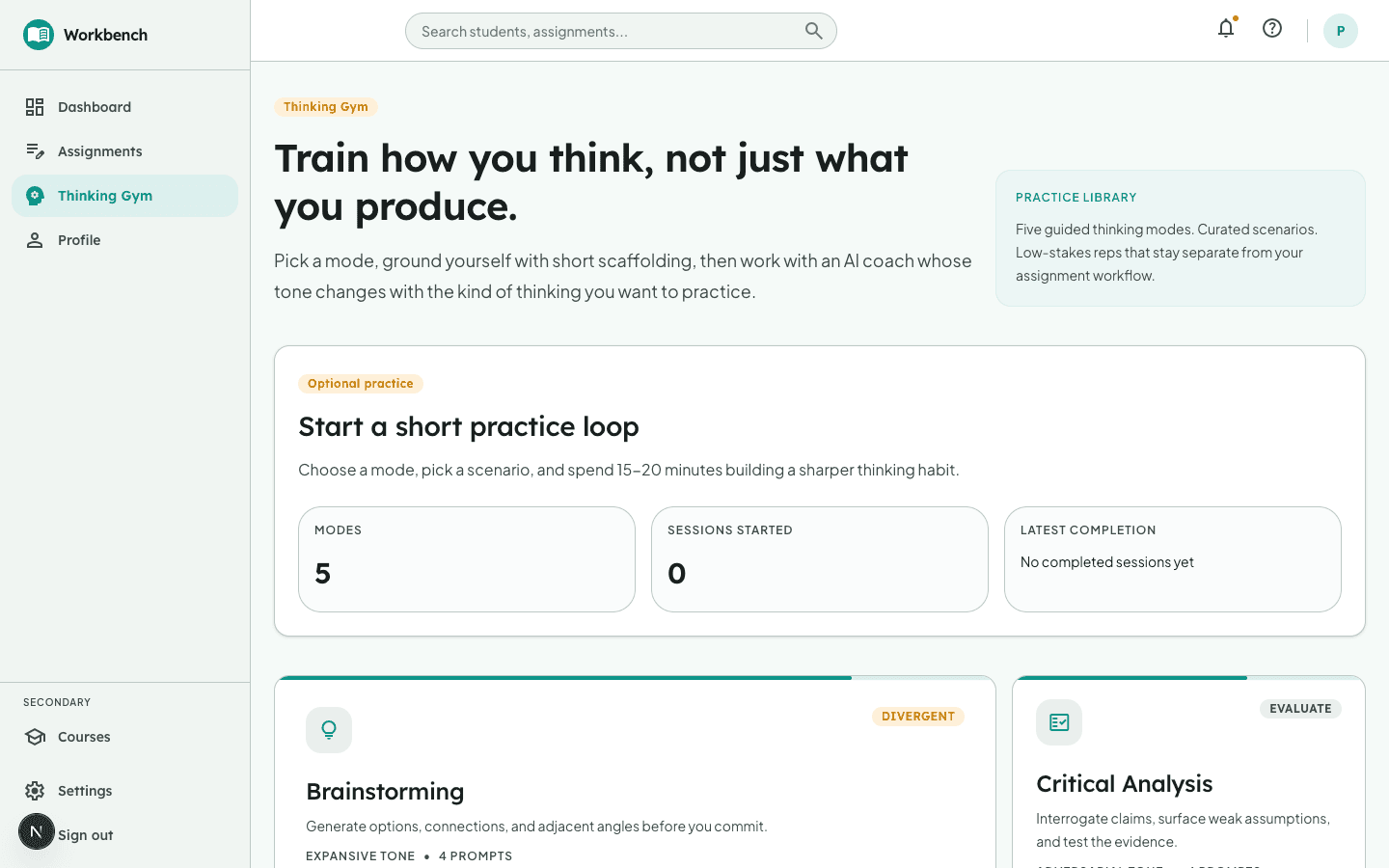
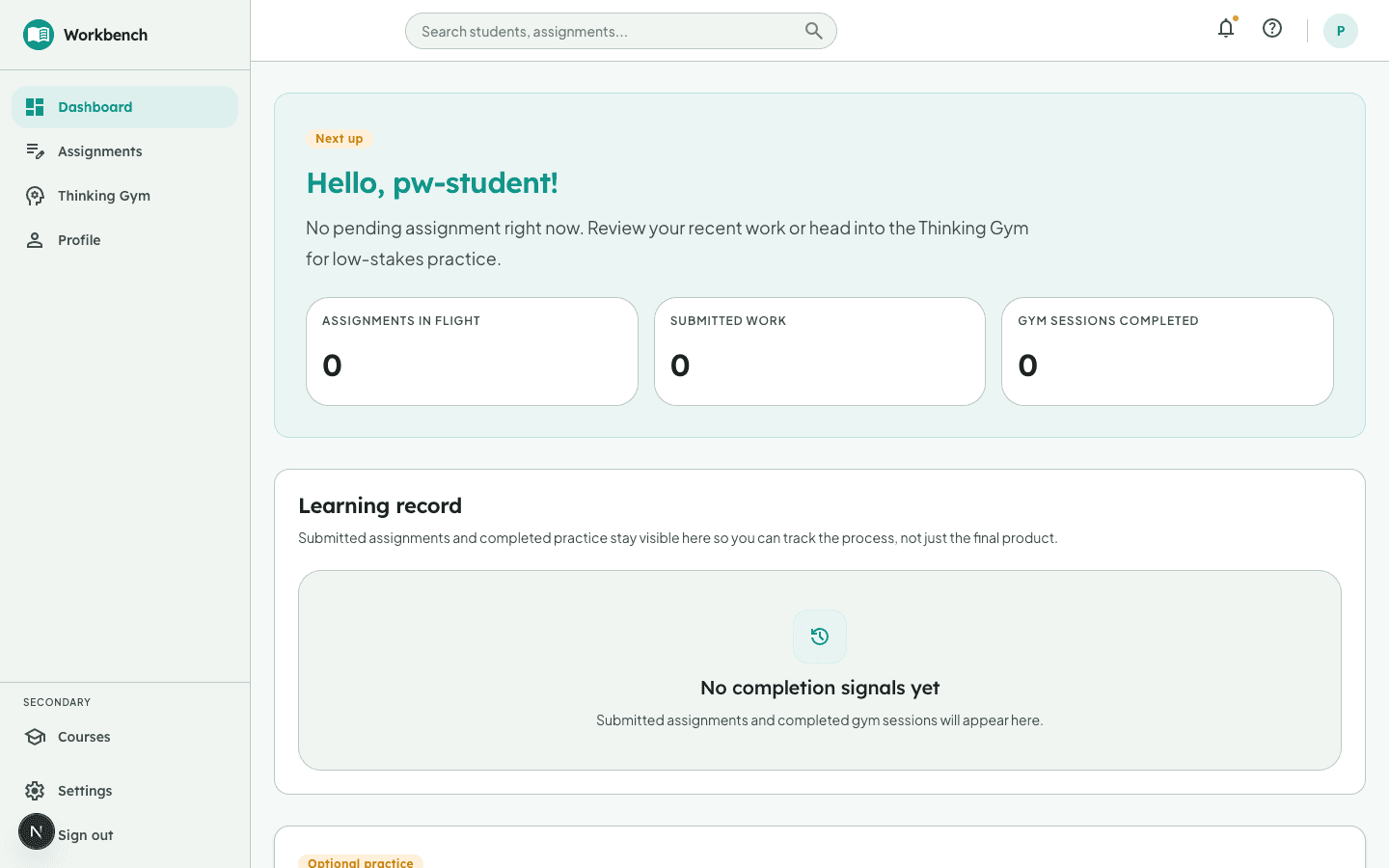
Student side
Instructor side